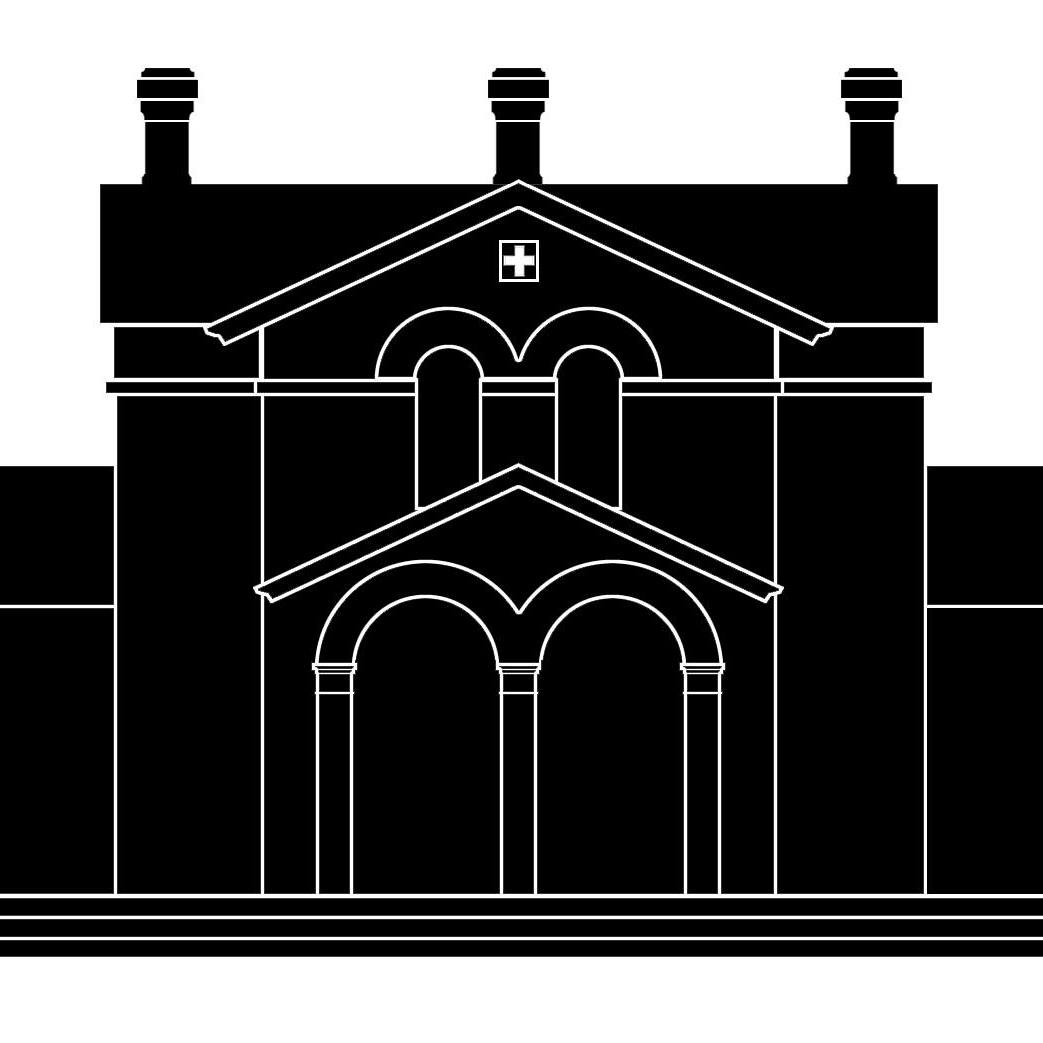
(c) Grahame Thom 2022
Kilmore. Victoria
In order to obtain a brief overview of the history of Kilmore and District, this time line has been prepared using such resources such as the Kilmore Free Press (Trove), the three published local history books and other records held by the Kilmore Historical Society. If any readers have suggestions for adding to this time line please contact our Society.
Before 1770
Victoria is home to many indigenous nations who have inhabited the land for thousands of years prior to European discovery and settlement.
1770
The continent of Australia is first sighted by the crew on Captain James Cook’s Endeavour voyage at Point Hicks, located in the far east of Victoria.
1798
George Bass sails through Bass Strait and sighted the coast around Wilson’s Promontory and Western Port Bay.
1800
In late December Captain James Grant in the Lady Nelson examines the coast of what is now Victoria.
1801
Grant returns in March to investigate the coastline between Cape Otway and Wilson’s Promontory and to survey Western Port.
1801-1802
After surveying Western Port in December 1801, Lieutenant John Murray, aboard the Lady Nelson, enters Port Phillip Bay on 14 February 1802, explores Corio Bay and formally takes possession of the area for Britain.
1802
Matthew Flinders reached Port Phillip in the Investigator in April, six weeks after the departure of Lieutenant Murray. His survey of Port Phillip is the first detailed examination of the bay and surrounding country.
1803
Acting-Lieutenant Charles Robbins, surveyor-general Charles Grimes and gardener James Flemming sail around Port Phillip Bay and along sections of the Maribyrnong and Yarra Rivers. In January and February Grimes carries out the first complete survey of Port Phillip.
A British convict settlement is established at Sullivan Bay near Sorrento in October 1803 under Lieutenant-Colonel David Collins but is abandoned shortly afterwards, mainly due to lack of water.
1824-1825
Pastoralist Hamilton Hume and sea captain William Hovell journey southwards from New South Wales, crossed the Murray River, Goulburn River and arrived at Corio Bay.
1826
A convict settlement is set up for a brief time at Corinella in Western Port Bay.
1830
Charles Stuart leads an expedition along the Murray River, arousing interest in settlement of land to the south.
1834
Victoria’s first permanent European settlement is established at Portland Bay by pioneer Edward Henty on 19 November. Up till then the area had been used by whalers as a base from which to carry out their activities.
1835
Melbourne is founded by John Batman and John Pascoe Fawkner.
In June Batman signs two treaties with the local Aborigines by which he claims 500,000 acres north of Melbourne and Corio Bay and 100,000 acres around Geelong and Indented Head.
Batman declares a point upstream from the Yarra River’s mouth will be the site for a village, which was later to become the Melbourne of today.
In August John Pascoe Fawkner’s party, sailed from Launceston on the Enterprize on 12 July, sets up a settlement on a site just below Yarra Falls (Fawkner does not join his party until 16 October).
1836
In June, then Surveyor General of NSW, Major Thomas Mitchell, crosses the Murray River into what is now known as Victoria. He continues in a south westerly direction, discovering the rich, fertile plains of western Victoria, which he later names ‘Australia Felix’. Settlement of Australia Felix commences soon after.
Governor Bourke, concerned by the increasing number of illegal settlements at Port Phillip, appoints Captain William Lonsdale as Chief Agent of Government, Police Magistrate and Commandant for the Port Phillip Region. He takes up his duties in October.
Governor Bourke grants squatters grazing rights beyond the “Limits of Location” subject to a £10 licence fee (effective 1 January 1837).
1837
In March Charles Bonney discovered the rich plains that later included Kilmore. In about June Bonney established a sheep station and built a hut (outstation) near the later intersection of Church Street and the Lancefield Road. He abandoned the site sometime end 1837.
Other squatters arrived in the district over the next few years – including Richard Julian Hamlyn, Frederick Armand Powlett, John Green, Robert Henson Broadhurst, Alfred Dowley Tootle, William Hamilton and Alexander Mollison.
The first overland mail service between Melbourne and Sydney begins operating on 30 December.
1838
John Pascoe Fawkner’s Melbourne Advertiser begins publication on 1 January (first copies handwritten).
1839
A party lead by Lady Jane Franklin travelled from Melbourne to Sydney, passing through land soon to become Kilmore.
Charles Joseph La Trobe is appointed Superintendent of the Port Phillip District and arrives in the colony on 30 September.
1841
On 12 April William Rutledge purchased a Special Survey grant of eight square miles (2070 ha) which later became the Parish of Willowmavin.
Rutledge had the south east corner surveyed in June which he named Kilmore said to be named after his home parish in County Cavan, Ireland
In September Francis Anderson granted a victualler’s licence conditional on John Wheeler’s Kilmore Inn being completed
Land sales were slow, mainly due an economic depression over the next two years.
1842
Francis Anderson granted a publican’s licence to the Kilmore Inn on 21 April. It was on the north east corner of the block on the NW corner of Foote Street and Sydney Road (now Sydney Street).
1843
Kilmore Post Office opened on 1 February at the Kilmore Inn with Francis Anderson as the postmaster
1844
Robert Allan opened a small flour mill in Sydney Street (now No 74)
1847
Melbourne declared a city by Queen Victoria on 25 June
1849
Samual Windredge appointed as Chief Constable at Kilmore
The large Catholic Parish of Kilmore created in April and the first minister was Rev Charles Clarke.
Rev William T Singleton was appointed the first Church of England minister in November.
Kilmore Cemetery Trust established and the Public Cemetery on the Lancefield Road opened – first burials in 1850
1850
Kilmore appointed as a place for the holding of a Court of Petty Sessions
Government survey of the area immediately south of Sydney Street in the Parish of Bylands, called locally as the new township. First Crown land sales.
Church of England school opened in March
1850-1875
Kilmore was the main provincial centre in the Colony providing agricultural produce to Melbourne.
1850s
Many hotels opened in the 1850s, including three still standing – Red Lion, Royal Oak and the Railway Hotel (Macs)
1851
Black Thursday bush fires cause destruction in the district
The Port Phillip District officially becomes the colony of Victoria on 1 July separate from New South Wales. Charles La Trobe becomes Lieutenant-Governor on 15 July.
Gold is discovered in Mount Alexander on 2 July and other areas in central Victoria soon after instigating a gold rush and a period of huge population growth and prosperity as immigrants arrived from all over the world to search for gold.
Kilmore had become a stop for travellers heading to and from the gold fields.
Presbyterian congregation established with Rev John Hume the first minister
1854
Cart and coach runs from Melbourne, through Kilmore, to Bendigo and beyond, and to Seymour through to Sydney. Kilmore was a favoured first overnight stopping place.
Committee formed to establish a hospital with Dr Beavan as President.
Kilmore Mechanics Institute was established
1855
Presbyterian school opened
Kilmore Diggings established
1855 – 1875
Newspaper Standard of Freedom published in Kilmore by John Rossitor.
1856
First representative from the electoral district of Kilmore to the Legislative Council of Victoria was John O’Shanassy from 1856 to 1865 – he became Premier and Chief Secretary three times during that period.
The Borough Council of Kilmore established. Smallest in the Colony of Victoria at nine square miles.
Members of the first Kilmore Borough Council elected, first Chairman Phillip Corboy
Kilmore Examiner commenced publication
1857
The 1857 Census – population of Kilmore 2330
Kilmore Gaol built
National Bank opened
1858
Kerosene street lamp tested. Kilmore streets continued to use kerosene lamps until 1909 when electricity was introduced.
Kilmore Agricultural Society established.
Wesleyan Church was built with Rev John Mewton as minister.
1858 – 1863
Warden of the gold fields at Kilmore appointed in 1858, office closed 1853. Kilmore Diggings active but very little gold found.
1860
Kilmore Hospital opened (bluestone building)
About this time Henry Van Heems took photographs of views of Kilmore
1862
New bluestone Post Office opened
1864
New bluestone Court House opened.
Kilmore Free Press commenced publication.
1865
Population 2000. Nine licenses granted to publicans.
Kilmore racecourse established
First issue of the Kilmore Free Press
1872
Catholic Cemetery on the Lancefield Road opened.
The north eastern railway began operating in April with a station later known as Kilmore East,10km east of Kilmore. The siting of this line caused a slow down in the development of Kilmore.
1874
First Shire Council established by the amalgamation of the Borough of Kilmore, the Road Boards of Bylands, Glenburnie and Willowmavin, and part of the Shire of Pyalong. Elections held and D James Kennedy became the first President.
1875
Three government funded schools (353, 358, 551) closed and a new Public School (1568) opened
1887
Celebrations to mark the Golden Jubilee of Queen Victoria
1888
Opening of a branch railway line to Kilmore, Heathcote and beyond
1890
Kilmore Water Trust established.
1891
Opening of a branch railway line from Kilmore to Lancefield, closed 1897
1892
Australia wide general depression 1892/93
Kilmore Gaol became the Kilmore Butter Factory
St Josephs College for girls on Sutherland Street opened in May by the Sisters of Mercy
1893
Marist Brother School for boys on White Street opened in January.
1894-95
Kilmore Town Hall built and opened
1899-1902
Local men volunteered to fight in the Boer War in South Africa.
1901
Victoria ceased being an independent Colony and became a State of the Commonwealth of Australia
1902
First tennis court construction.
1902-14
Kilmore’s population remained stable at about 2000
1904-1905
Victorian Municipalities introduced speed restrictions for motor vehicles
1909
Kilmore Electric Supply Company made electricity available to the community
1910
The first telephone connection to a private home.
1914
The Sisters of Mercy and the Marists Brothers exchanged school sites, and the boys school was renamed Assumption College
1914-1918
Many local men and women volunteered to serve overseas during World War One
1918-1920
The Great Influenza Pandemic
1924
100th Anniversary of the Hume and Hovell expedition passing close by to the east of Kilmore. Erection of the Tower on Monument Hill as a monument to Hume and Hovel
First two radio stations in Victoria commenced broadcasting.
1927
The first “Back to Kilmore” celebrations held in February
1929- 1939
The Great 1930s Depression
1938
The second “Back to Kilmore” celebrations recognising the 100th anniversary of Kilmore, including the publication of “The Tale of the Century – Kilmore 1837’1937” by J A Maher
1939-1945
Many local men and women volunteered to serve overseas during World War Two
1949
Spicer and Demold Ltd established a manufacturing factory of envelopes and other stationery items in a large army hut
1953
Successful “Back to Kilmore” celebrations March
1956
Introduction of black and white television in Australia
1957
Wallan Riding transferred from the Shire of Broadmeadows to the Shire of Kilmore
1963
Opening of the Kilmore Memorial Hall
1965
Branch railway line to Kilmore and beyond closed in June.
1967
Boarding ends at St Joseph’s College (girls)
Butter Factory closes at the old Jail
1968
Freight train services cease on the Heathcote line
1971
Girls enrol at Assumption College for the first time
1972
Manual telephone exchange closed
1973
Work commences at the Golf Links Estate, first major development.
1974
Construction of sewerage network commences
St Joseph’s College closes
1976
The Hume Freeway opened and the Hume Highway through Kilmore renamed the Northern Highway
1977
Closure of saleyard near Football Club grounds
1978
The Kilmore Civic Centre opened
1979
Closure of saleyard at Church Street
1984
Closure of the Bylands Public School
1985
Extensive bushfires in the Kilmore District
1986
First natural gas connections
1988
150th Anniversary of Kilmore celebrated, including the publication of “Kilmore on the Sydney Road” by Maya V Tucker
1990
Kilmore International School opened
1994
The Shire of Kilmore became part of the newly created Shire of Mitchell
2001
Population of Kilmore 3521
2016
Population of Kilmore 6953
2020-2022
COVID 19 Pandemic
Prepared by Grahame Thom 2022
 Kilmore Historical Society